Passage East is a small place, but there’s plenty within a few minutes of the door, and the ferry puts the whole Hook peninsula within reach.
In the village
The car ferry is worth doing for its own sake: five minutes across to Ballyhack and back, running all day, passageferry.ie. The ruined walls of Geneva Barracks, the eighteenth-century town that never was, stand in a field a couple of kilometres down the road towards Crooke; that story is on our History page. And the Parade Square, just below us, may itself be a leftover of the plans for that town.
A short drive
Faithlegg is seven minutes away: a country-house hotel built in 1783 by Cornelius Bolton (the same man behind the failed New Geneva scheme that gave us our name), with a championship golf course, a spa and estate walks, faithlegg.com. Heading back to us, it’s a straight run down the Green Road onto the Passage Road and into the village. Woodstown strand is a long sheltered beach ten minutes south. Dunmore East, twenty minutes down the coast, is a working fishing harbour with cliffs and coves either side of it. And Waterford city is fifteen minutes up the R683, for the Viking Triangle, Reginald’s Tower (where Strongbow married Aoife MacMurrough in 1170, sealing the Norman invasion of Ireland) and the crystal.
Across on the ferry
Ballyhack has a fifteenth-century tower house standing over the slip, raised by the Knights Hospitallers of St John, the crusading order that took over the Templars’ Irish holdings after 1307. Arthurstown, a mile on, is home to Ballyhack Smokehouse and its award-winning smoked salmon, ballyhacksmokehouse.com. Duncannon, seven minutes further, has a star-shaped fort on the headland and a big strand below it. The fort has its own ghost stories too: a soldier said to walk near the mess-hall stairs, and a woman’s crying reported in the tunnels beneath. Dunbrody Abbey, the Cistercian ruin at Campile, is a short run inland.
On the road out to the Hook you’ll pass Loftus Hall, billed as Ireland’s most haunted house: the story goes that a mysterious stranger revealed a cloven hoof during an 1775 card game and vanished through the ceiling in a ball of flame. Take it as folklore rather than fact, but it’s kept the place famous for two centuries. The interior’s closed while a hotel redevelopment gets under way, but the grounds and walled gardens are open, loftushall.ie.
And Hook Lighthouse, about twenty-five minutes from the slip, is one of the oldest working lighthouses in the world: the tower is around 800 years old, hookheritage.ie. It stands where a Welsh monk called Dubhán is said to have kept a warning beacon burning since the fifth century, and his name survives in the headland’s Irish name, Rinn Duáin.
Wildlife
Common dolphins turn up in the Suir often enough that the Ballyhack–Passage East ferryman reports pods of a hundred or more to the Irish Whale and Dolphin Group most winters, and fin and humpback whales are seen further out towards Dunmore East and Hook Head. The wider harbour is a protected home for otters and seals too, and over fifty species of migrating and wintering waterbirds use the estuary each year.
The goats
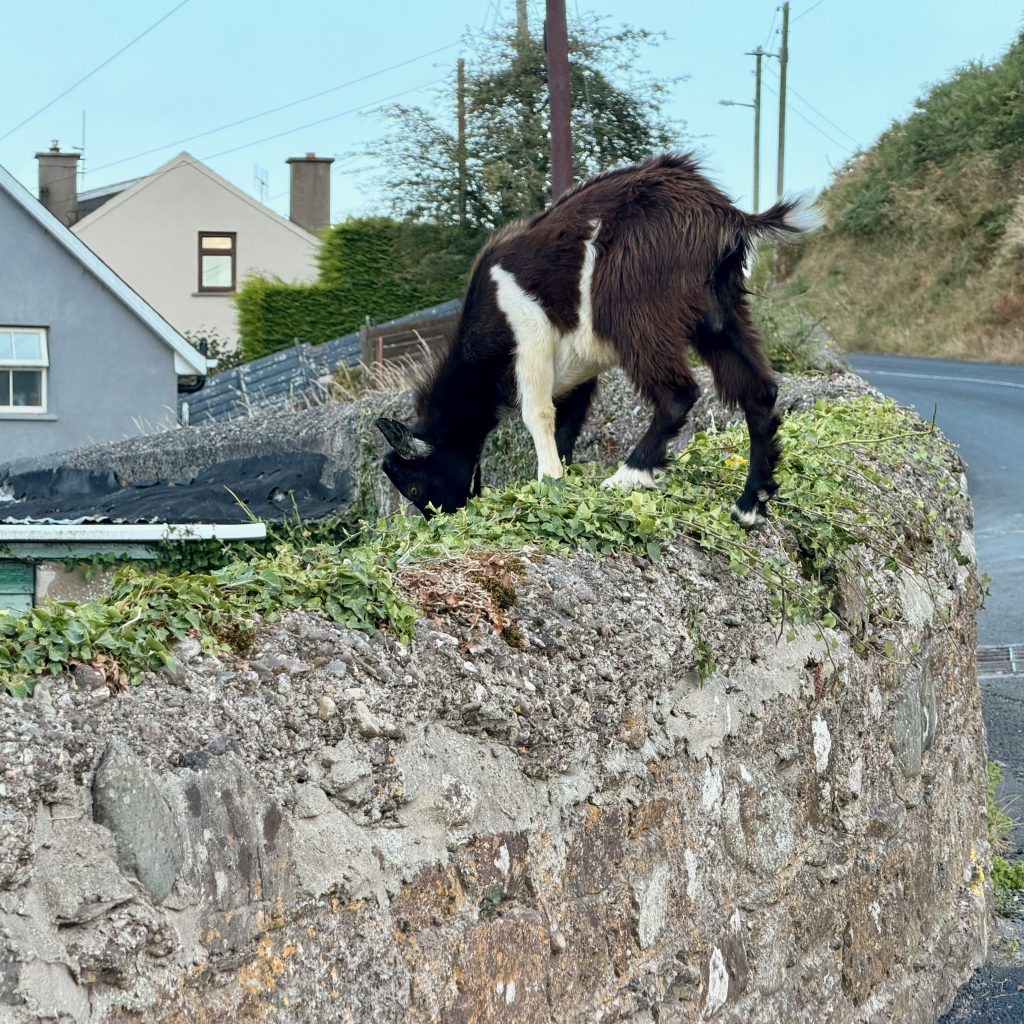
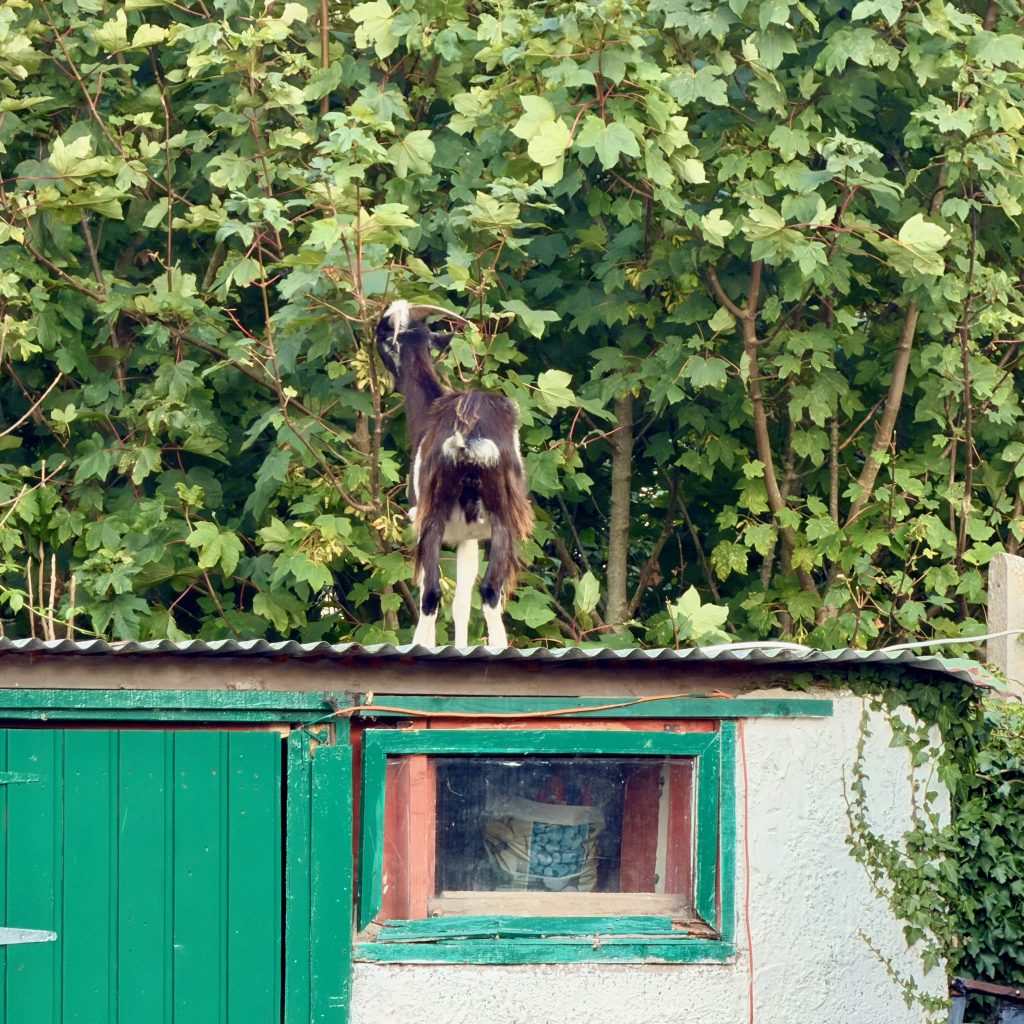
Passage East has a small feral goat herd that lives on the cliffs and roams into the village, browsing walls, hedges and roofs: the photos below show why locals keep an eye on them. Fishermen have long read their movement down off the cliffs as a sign of a coming storm. It’s sometimes said the goats arrived with French or Huguenot settlers who came to New Geneva; that’s local lore rather than a documented fact, but it’s a good story either way.